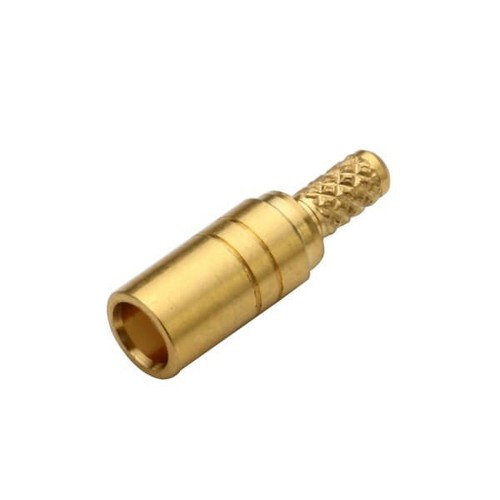
About Fakra C Female Blue Crimp Connector
ApplianceElectrical Characteristics
50 Ohm
0 to 6 GHz
225 VRMS
1000 Volts
5000 M min
Mechanical Characteristics
20 N max.
10 N min.
500 mating and unmating cycles min
Environmental Characteristics
Temperature Range-65C to +165C
Material:
| Part | Material | Finish |
| Body | Brass | Nickel |
| Center Contact Pin | Phosphor | Gold |
| Insulator | TEFLON
|
Robust Design for Automotive ReliabilityWith a zinc die-cast housing and nickel-plated body, the Fakra C Female Blue Crimp Connector is built to withstand harsh automotive environments. Its vibration-resistant, snap-in locking mechanism ensures reliable performance, making it perfectly suited for demanding telematics and RF communication applications.
Versatile Applications and ComplianceConforming to ISO 20860-1 and RoHS guidelines, this connector is frequently used in automotive RF systems, GPS, and GSM modules. The PTFE insulation, gold-over-nickel contact plating, and temperature resilience from -40C to +105C assure durability and stable connectivity under tough conditions.
FAQs of Fakra C Female Blue Crimp Connector:
Q: How do I install the Fakra C Female Blue Crimp Connector on my coaxial cable?
A: To install, ensure you select a compatible coaxial cable such as RG-58 or RG-174. Carefully strip the cable and prepare the conductor, insert the stripped cable into the connector, then securely crimp the contact using the appropriate tool. Snap the connector into place until it locks for a vibration-resistant connection.
Q: What are the benefits of using gold-over-nickel contact plating in this connector?
A: Gold-over-nickel plating provides superior corrosion resistance and optimal signal conduction, which are crucial for long-term performance in automotive RF applications. This ensures signal integrity and reduces risk of oxidation at connection points.
Q: Where can I use this Fakra C connector?
A: This connector is primarily designed for automotive applications, including GPS antennas, GSM modules, and telematics systems. Its robust construction and compliance with industry standards also allow it to be used in any RF communication system that requires secure, vibration-resistant connections.
Q: When is it necessary to use a Fakra C (Code C) standard connector?
A: Choose a Fakra C (Code C) connector when your system requires coded, keyed connectors for secure, color-coded mating in RF automotive environments. This reduces errors in installation and matches OEM specifications for automotive radio-frequency components.
Q: What is involved in the crimp assembly process?
A: The process involves stripping the coaxial cable, inserting the conductor into the connector, and using a crimping tool to attach the contact. The outer housing is then crimped to secure both conductor and shield, ensuring strong mechanical and electrical connections.
Q: How does the locking mechanism enhance performance in vehicles?
A: The snap-in locking slot ensures that the connector remains securely mated, even when subjected to intense vibration or movement, which is common in automotive environments. This guarantees consistent signal transmission and reduces maintenance needs.





 Send Inquiry
 Get Latest Price


