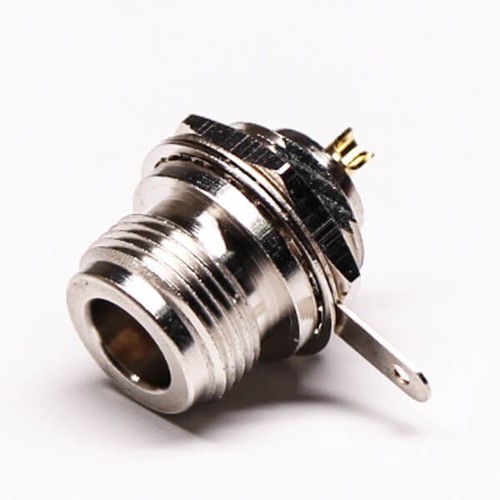
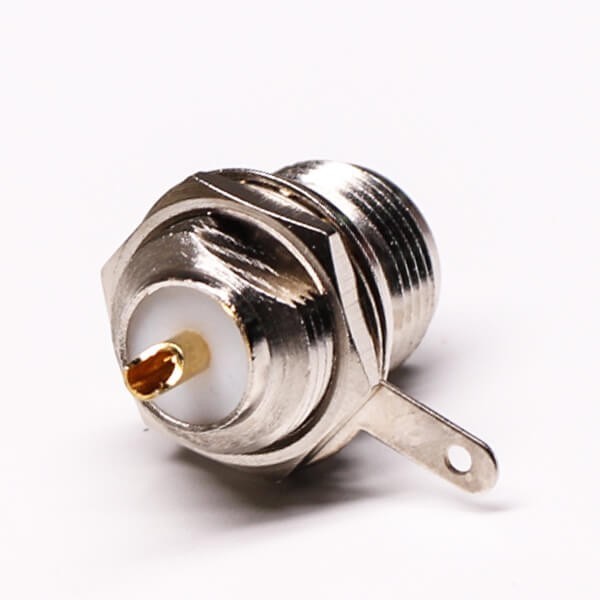
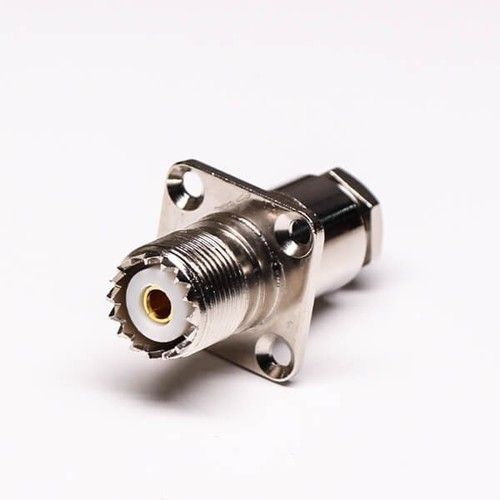
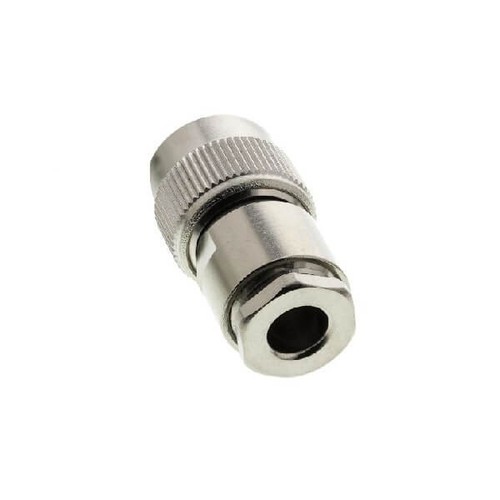
About Cable Straight Jack Solder N Type Connector
Techinial Datasheet:
Electrical Characteristics
- Impedance50 ohm
- Frequency Range: 0~13 Ghz
- VSWR: Straight type 1.3max / R/A type 1.5max
- Dielectric Withstanding Voltage: 2500 V rms
- Working Voltage: 1000 V rms
- Center Contact Resistance 1.0 m (Milliohms max.)
- Outer Contact Resistance 0.2 m (Milliohms max.)
- Insultation Resistance 5 x 10 m (Megohms min.)
Mechanical Characteristics
- Coupling: 5/8-24 thread
- Contact Retention: 6 lbs min.
- Coupling nut torque: 30 in-lbs. min.
- Durability(mating) 500 cycles (For Beryllium Copper Contact)
Environmental Characteristics
- Temprature Range: -65C ~ +125C ( PE Cable-40C ~ +85C )
- Vibration: MIL-STD-202 Meth.204
- Corrosion resistance: MIL-STD-202 Meth. 101
Material:
| Part | Material | Finish |
| Body | Brass | Nickel Plated |
| Chain | Brass | Nickel Plated |
Superior High-Frequency PerformanceWith a frequency range extending up to 11 GHz and a VSWR of 1.30, this N Type connector is engineered for demanding RF and microwave environments. It supports stable signal transmission with minimal loss, making it suitable for high-precision applications such as test and measurement, communication systems, and broadcasting equipment.
Durability and Corrosion ResistanceConstructed with a nickel-plated brass body and gold-plated center contact, this connector ensures excellent corrosion resistance and extended lifespan. PTFE insulation and robust materials support reliable operation under extreme conditions, with a rated temperature range from -65C to +165C and IP67 ingress protection when properly mated.
Flexible Application & Secure ConnectivityThe connectors straight jack design offers easy installation via solder connection, suitable for both panel mount and cable attachment. Featuring secure screw coupling and customizable length, it accommodates various cable requirements in laboratory, industrial, and field-use scenarios.
FAQs of Cable Straight Jack Solder N Type Connector:
Q: How do I properly solder the Cable Straight Jack Solder N Type Connector to a coaxial cable?
A: To solder this connector, strip the coaxial cable to expose the conductor, attach the conductor to the gold-plated center contact, and solder firmly. Ensure PTFE insulator protection is intact. Complete assembly by securing the outer conductor for proper grounding, then attach the body and tighten the screw coupling for secure, stable connectivity.
Q: What applications are best suited for this N Type connector?
A: This connector is ideal for RF and microwave signal transmission in applications such as communication systems, laboratory instruments, broadcast equipment, antenna connections, and test and measurement setups. Its robustness, frequency range, and low signal loss cater to both indoor and outdoor technical environments.
Q: When should I consider using a solder type, straight N Jack connector over other RF connectors?
A: Choose this solder-type N Jack connector when you require secure, reliable connections with minimal signal loss up to 11 GHz, especially in high-vibration or outdoor environments. Its straight, inline form also makes it preferable where direct cable routing and customizable cable lengths are necessary.
Q: Where can this connector be mounted or installed?
A: This connector can be panel-mounted or attached directly to cables, depending on installation needs. Its robust design and screw coupling ensure a secure fit for laboratory equipment, antennas, or communication panels, as well as field or broadcast applications requiring durable, weather-resistant performance.
Q: What makes the Cable Straight Jack N Type Connector easy to install and use?
A: The connectors solder-type interface and straight design make cable preparation and connection straightforward. Its secure screw coupling prevents accidental disconnection, and customizable cable lengths offer application flexibility. PTFE insulation ensures safe handling and high thermal stability during installation.
Q: How does this connector benefit high-frequency or outdoor signal transmission?
A: Its low VSWR (1.30), gold-plated center contact, and high insulation resistance (5000 M) ensure minimal signal degradation and low loss, while IP67 rating provides dust and water resistancemaking it exceptionally suited for rigorous outdoor or high-frequency transmission scenarios.






 Send Inquiry
 Get Latest Price

