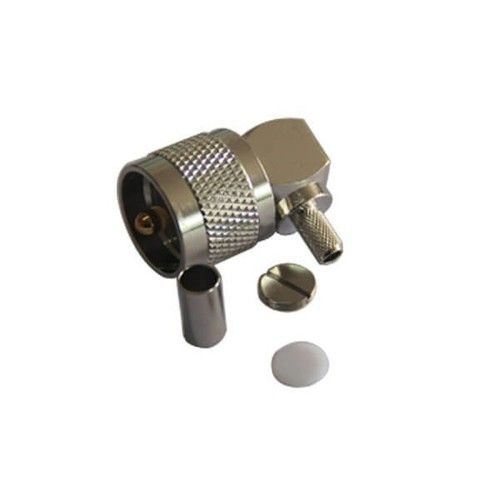
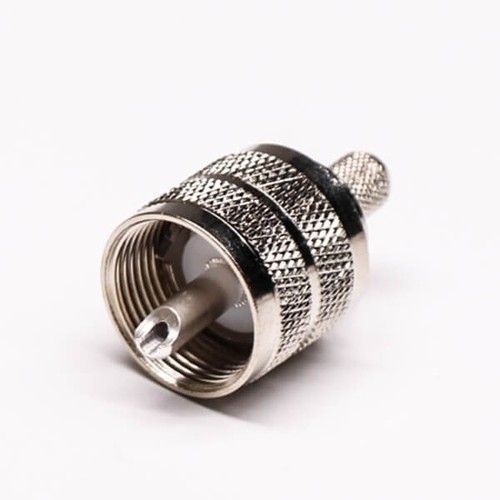
About Right Angle UHF Connector PL 259 Plug Crimp Type For RG214, LMR195
Description: Cable Connector, plug/male, Angled/90,RG214 LMR195, Crimp Type
Accessories: insulator+ferrule+cover
Features:
- Cable Connector, plug/male, Angled/90, RG214 LMR195, Crimp Type;
- Designed for low frequency systems from 0.6-300MHz;
- Threaded coupling mechanism is easy for assembly with high durability;
- From the OEM Original Factory, same quality with much better price.
Main Application of UHF Connectors:
Antennas, Military, Public Address Systems and Low-frequency applications
Highly Reliable Right Angle ConnectionOptimized for limited-space installations, this UHF PL 259 connectors right angle construction ensures an efficient and orderly cable layout. The rugged, nickel-plated brass housing protects against corrosion, while the PTFE insulator maintains dielectric integrity over a broad temperature range, from -55C to +155C. Whether for base stations or amateur radios, it provides a secure and steadfast electrical connection.
Effortless Crimp InstallationUtilizing a user-friendly crimp termination, this connector enables fast, repeatable, and tool-assisted assembly for RG214 and LMR195 cables. The threaded locking system guarantees stable coupling, reducing signal loss and disconnections. This streamlined installation process is suitable for both field technicians and assembly lines alike.
Versatile Applications in RF SystemsDesigned for coaxial transmission in demanding RF scenarios, this connector is applicable in a variety of settings including antennas, test equipment, and radio transmitters. Its 50 Ohm impedance, low VSWR, and reliable gold or silver plating ensure consistent performance across the 0-300 MHz frequency range, catering to the needs of exporters, suppliers, and manufacturers in the RF industry.
FAQs of Right Angle UHF Connector PL 259 Plug Crimp Type For RG214, LMR195:
Q: How is the Right Angle UHF Connector PL 259 Plug installed on RG214 or LMR195 cables?
A: This connector employs a crimp termination style, where the cable is prepared, inserted into the connector, and then secured using a compatible crimping tool. The threaded coupling ensures stable attachment, making installation quick and reliable.
Q: What are the main benefits of using a right-angle UHF connector for my RF application?
A: The right-angle design facilitates better cable routing in tight spaces, reduces cable strain, and minimizes mechanical stress on both cable and connector. This helps maintain signal integrity in setups like amateur radios, antenna systems, and test equipment.
Q: When should I choose this connector over straight PL 259 connectors?
A: Choose a right-angle variant when your installation requires the cable to change direction immediately after the connector or where space constraints make straight connectors impractical, such as behind equipment panels or in compact enclosures.
Q: Where can this connector be effectively used?
A: This connector is ideal for coaxial connections in environments such as antennas, amateur radio stations, base station transceivers, RF test instruments, and other radio frequency equipment requiring reliable signal transmission.
Q: What ensures consistent performance in this UHF connector?
A: The combination of gold or silver-plated contacts, a nickel-plated brass body, PTFE insulation, and a crimped connection delivers robust electrical performance with low signal loss, a maximum VSWR of 1.3, and durability over a wide temperature range.
Q: What is the process for selecting the appropriate model of this connector?
A: First, identify your coaxial cable type (RG214 or LMR195). Then, verify frequency requirements (0-300 MHz), and select gold or silver contact plating according to performance preference or system compatibility.
Q: What usage and application scenarios are supported by this connector?
A: It is suited for RF transmission, amateur radio operations, base stations, test setups, and various antenna installations thanks to its dependable electrical performance, secure threading, and resilience to demanding operational environments.





 Send Inquiry
 Get Latest Price

