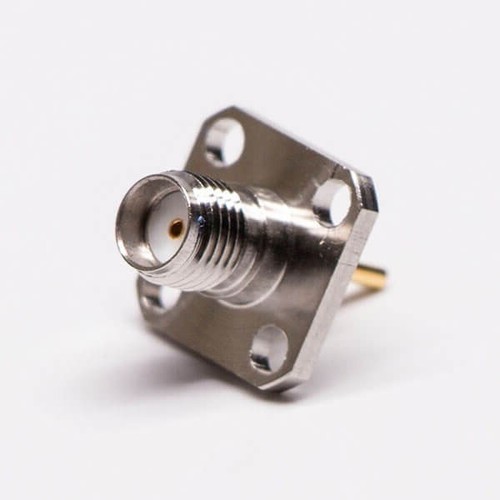
About SMA Connector For RG316 Crimp Type Straight Plug For Cable RG174
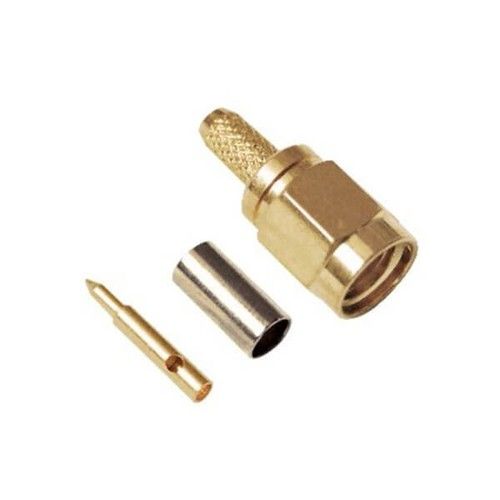
Description: Cable Connector,Straight/180,RG316,CrimpType,50, Plug/Male,RG174
Accessories: pin+Ferrule
Features:
- Cable Connector,Straight/180,RG316,Crimp Type,50, Plug/Male,RG174;
- Excellent electrical performance up to 18GHz with low reflection;
- Thread type coupling mechanism ensure small loss and high security in compact design;
- High Quality with 30 days 100% Money back;
- From the OEM Original Factory, same quality with much better price.
Main Application of SMA Connectors:
- Aerospace and Defense: Hand-held field Device and Instrumentation
- Medical: Instrumentation
- Commercial Vehicle: Bluetooth and GPS
- Telecommunications: Wireless Base Stations, Cellular Mobile System
- Data/Communications:Wifi, WiMAX
- Industrial: Active and passive components, instrumentation, M2M Communications, Vehicle Tracking System
Exceptional Electrical PerformanceDesigned to handle frequencies up to 6 GHz, this SMA connector offers impressive return loss, low VSWR, and minimal contact resistance, ensuring high signal integrity for demanding RF applications. Its gold-over-nickel contact plating further increases conductivity and reliability, making it a perfect choice for high-frequency data transmission.
Robust Build and Corrosion ResistanceManufactured from brass with a gold-plated finish, the connector delivers outstanding durability and corrosion resistance. This ensures longevity even under harsh environmental conditions, while the PTFE insulation and tinned copper shield enhance structural integrity and consistent performance.
Easy Installation for Multiple ApplicationsThe crimp type design allows for straightforward, secure attachment to RG316 and RG174 coaxial cables. Its compatibility with a single core copper conductor simplifies installation, making it suitable for both new assemblies and replacements in RF cable systems, including test equipment and telecom networks.
FAQs of SMA Connector For RG316 Crimp Type Straight Plug For Cable RG174:
Q: How do I properly crimp this SMA connector onto an RG316 or RG174 cable?
A: To install the SMA connector, strip the cable to expose the conductor, insert it into the connector parts, and use a compatible crimping tool to secure both the center pin and the outer sleeve. Ensure the cable fits snugly for optimal signal integrity and mechanical retention.
Q: What are the main benefits of using a gold-plated SMA connector for RG316/RG174 cables?
A: Gold plating over nickel enhances corrosion resistance, maintains long-term electrical conductivity, and ensures reliable signal transmission. This benefit is crucial for applications requiring minimal signal loss and high durability, such as RF and microwave systems.
Q: Where can this SMA connector be used?
A: This connector is ideal for RF signal transmission in antenna connections, test equipment, telecom networks, and other microwave communication assemblies. Its robust structure and high performance make it suitable for diverse environments and professional applications.
Q: What frequency range and impedance does this SMA connector support?
A: The connector operates efficiently from DC up to 6 GHz and is designed for a standard impedance of 50 ohms, delivering excellent signal quality in high-frequency communication systems.
Q: When should I consider replacing the connector?
A: The connector supports over 500 mating cycles. Replace it if you notice degradation in signal performance, visible wear on the threads, or if its been reconnected frequently beyond its rated mating cycles.
Q: What makes this SMA connector suitable for professional RF applications?
A: Its high precision, low insertion loss, rugged build, excellent return loss, corrosion-resistant finish, and reliable crimp termination make it a trusted component for demanding professional RF and telecom applications.
Q: How does the threaded coupling enhance performance?
A: The threaded coupling design ensures a reliable, vibration-resistant connection that maintains stable electrical contact, preventing accidental disconnection and signal dropouts in critical applications.





 Send Inquiry
 Get Latest Price

