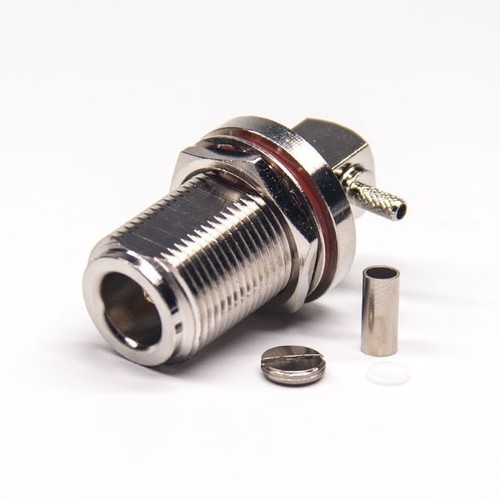
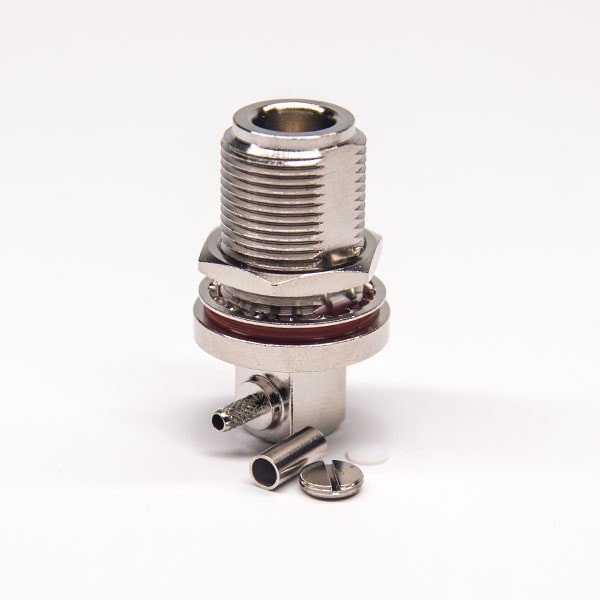
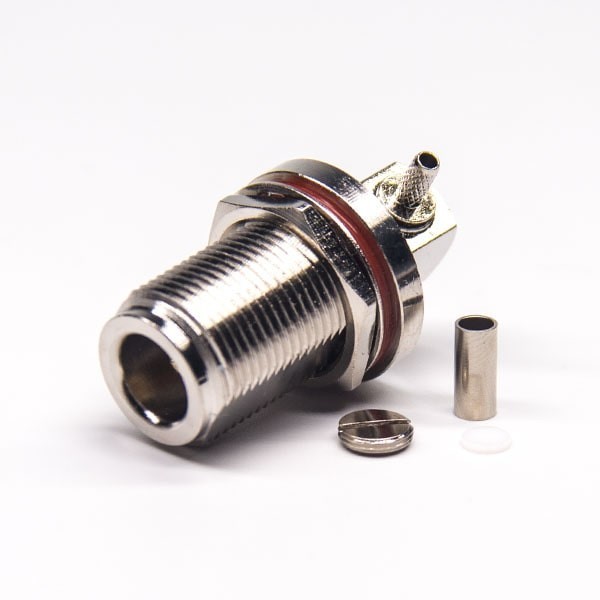
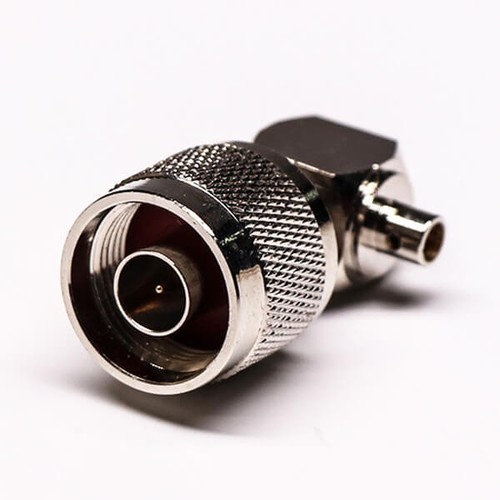
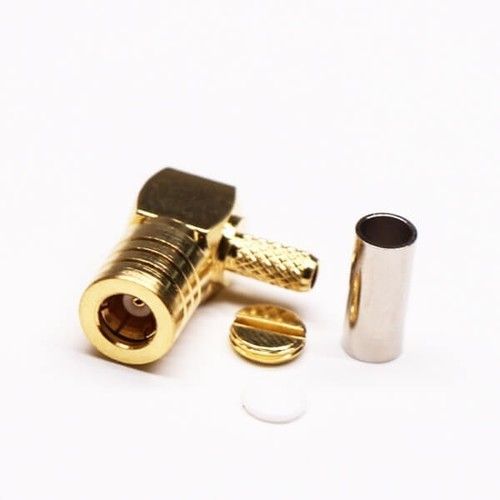
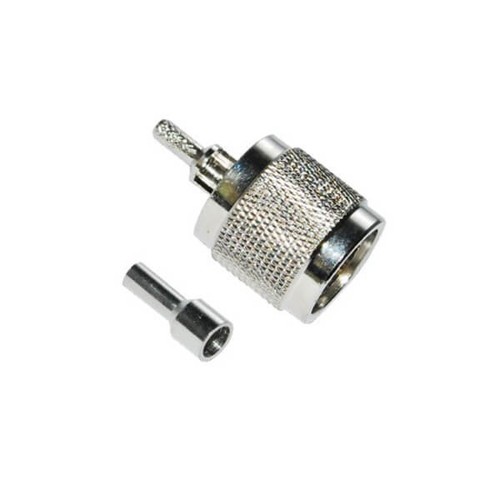
About Type N Connector Right Angle Female Blukhead Crimp Type For Cable
Techinial Datasheet:
Electrical Characteristics
- Impedance50 ohm
- Frequency Range: 0~13 Ghz
- VSWR: Straight type 1.3max / R/A type 1.5max
- Dielectric Withstanding Voltage: 2500 V rms
- Working Voltage: 1000 V rms
- Center Contact Resistance 1.0 m (Milliohms max.)
- Outer Contact Resistance 0.2 m (Milliohms max.)
- Insultation Resistance 5 x 10 m (Megohms min.)
Mechanical Characteristics
- Coupling: 5/8-24 thread
- Contact Retention: 6 lbs min.
- Coupling nut torque: 30 in-lbs. min.
- Durability(mating) 500 cycles (For Beryllium Copper Contact)
Environmental Characteristics
- Temprature Range: -65C ~ +125C ( PE Cable-40C ~ +85C )
- Vibration: MIL-STD-202 Meth.204
- Corrosion resistance: MIL-STD-202 Meth. 101
Material:
| Part | Material | Finish |
| Body | Brass | Nickel Plated |
| Chain | Brass | Nickel Plated |
Superior Performance for Demanding RF ApplicationsThis Type N right angle female bulkhead connector delivers low VSWR (1.3 up to 3 GHz), high-frequency operation up to 11 GHz, and rugged durability. Its gold-over-nickel contact plating improves signal conductivity, while nickel-plated brass construction withstands harsh conditions including high humidity and salt exposure.
Effortless Installation and VersatilityDesigned with a bulkhead mount and rear crimp cable entry, this connector allows easy, secure integration into panels using a panel nut. It supports various coaxial cables and can be tailored for custom lengths, making it flexible for RF assemblies, tower installations, and instrumentation.
Reliable Connection and ComplianceA threaded coupling provides a secure, vibration-resistant fit. PTFE insulation (UL 94 V-0 rated) ensures high dielectric strength and fire safety. Compliant with RoHS standards, it aligns with modern environmental regulations, delivering quality and safety in every install.
FAQs of Type N Connector Right Angle Female Blukhead Crimp Type For Cable:
Q: How do I properly install the Type N right angle bulkhead connector to a panel?
A: To install, insert the connectors bulkhead through the panel opening, secure it with the provided panel nut, and then crimp the coaxial cable to the rear entry using the appropriate crimping tool designed for the cables type and size.
Q: What types of applications is this connector best suited for?
A: This connector excels in RF/Microwave applications including telecom infrastructure, wireless base stations, antenna connections, coaxial cable assemblies, and tower installations due to its high-frequency handling, low VSWR, and durable construction.
Q: When should I choose a right angle bulkhead connector over a straight type?
A: Use the right angle bulkhead connector in situations where space is limited behind the mounting panel or when cables need to be routed sideways, optimizing space without compromising signal performance.
Q: Where can this connector operate in terms of environment and temperature?
A: It is designed for harsh indoor and outdoor environments, operating efficiently between -55C and +155C, and withstands up to 95% non-condensing humidity and 500 hours of salt spray, making it suitable for challenging weather conditions.
Q: What is the process for crimping the cable to this connector?
A: First, strip the coaxial cable to the required dimensions, insert the cable into the rear entry of the connector, ensure proper contact alignment, and use a matching crimp tool to secure both the pin and the ferrule, creating a robust electrical and mechanical connection.
Q: How does the design benefit long-term signal transmission?
A: The connectors robust nickel-plated body, gold-plated contacts, and PTFE insulation ensure minimal signal loss, stable impedance, superior corrosion resistance, and high durability, providing long-term reliable signal transmission in demanding environments.





 Send Inquiry
 Get Latest Price

